
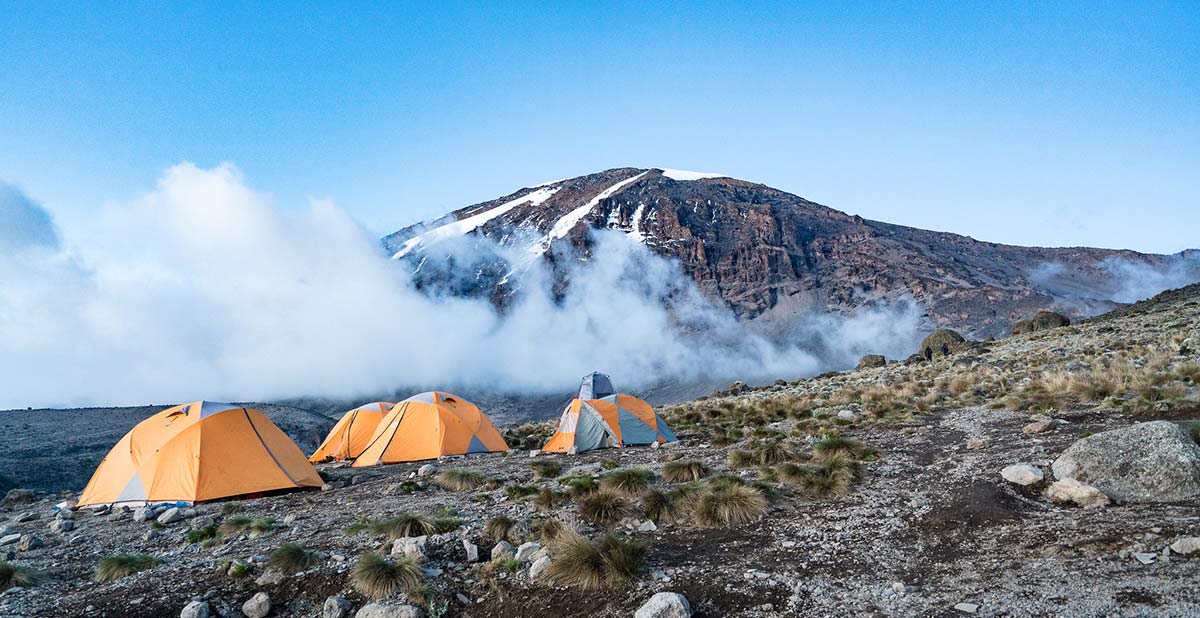
How fit do I need to be?
Kilimanjaro is a walk, not a technical climb, but it is a long one at altitude. If you can comfortably hike for six hours on consecutive days you are fit enough. The bigger factor is going slowly enough to acclimatise, which is why we recommend seven or eight days over five or six.
Which route is best?
For most first-time climbers we recommend the 7-day Machame or the 8-day Lemosho: both are scenic, both climb high and sleep low, and both have strong summit rates. Marangu is the only route with hut accommodation. Rongai is drier and quieter, approaching from the north.
When should I climb?
The driest months are January to early March and June to October. It is possible to climb in the rainy seasons (April, May, November) and the mountain is quieter, but expect mud and cloud.
What is included?
Park fees, camping fees, rescue fees, your guide, assistant guides, cook and porters, all meals on the mountain, tents, mess tent, chairs and table, drinking water, transfers from Moshi or Arusha, and two nights of hotel accommodation before and after. Personal kit, tips, flights and visas are not included, and we will tell you the tipping guideline before you book so there are no surprises.
Is it safe?
Our guides carry a pulse oximeter and a first-aid kit, check your oxygen saturation twice a day, and are trained to recognise altitude sickness early. We follow the Kilimanjaro National Park rules on group ratios and we will always choose your health over the summit.